Recommended Gear
XL6019 Boost Converter Module
A high-efficiency boost converter module for stepping up voltage — perfect for running 12V devices from batteries, solar panels, or USB power banks.
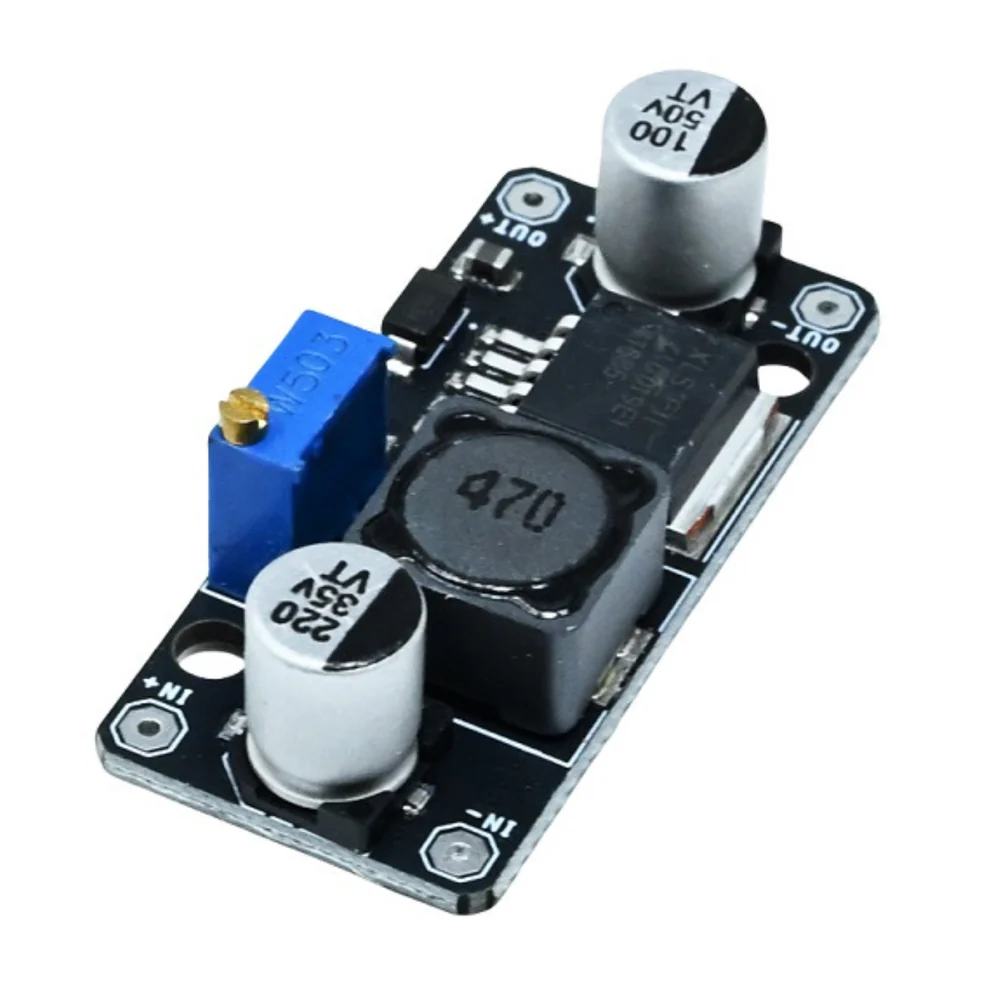
Why It’s So Good
The XL6019 is my go-to boost converter module. Here’s what makes it stand out:
- Wide Voltage Boost Range — Step up from 3-32V input to 5-35V output. Run 12V devices from a 5V USB power bank or boost 12V to 19V for a laptop.
- High Current Capacity — Up to 4A continuous output (with proper cooling). Enough for most hobby electronics and small motors.
- Adjustable Output — Onboard potentiometer lets you dial in the exact voltage you need. No external components required.
- High Efficiency — 94% typical efficiency. Minimal power loss means longer battery runtime and less heat.
- Overcurrent Protection — Built-in current limiting protects against shorts and overload conditions.
- Compact PCB — Small form factor fits inside project enclosures easily.
- LED Indicator — Power LED confirms operation at a glance.
- Rock-Solid Reliable — XL6019 IC is proven in thousands of projects. Very few failures in the field.
- Budget-Friendly — Around $1-2 USD. Incredible value for the capability.
Technical Specs
| Feature | Specification |
|---|---|
| IC | XL6019 boost converter |
| Input Voltage | 3-32V DC |
| Output Voltage | 5-35V DC (adjustable) |
| Output Current | 4A max (with heatsink) |
| Switching Frequency | 400 kHz |
| Efficiency | Up to 94% |
| Operating Temperature | -40°C to +85°C |
| Dimensions | ~43mm × 21mm × 14mm |
| Typical Cost | USD 1-2 |
Perfect For
Battery-Powered Projects:
- Running 12V devices from 9V batteries
- Boosting USB 5V to 12V for fans, pumps, or LED strips
- Solar panel voltage regulation
- Portable power supply projects
Voltage Conversion:
- 5V to 12V conversion for automotive accessories
- 12V to 19V for laptop power from car battery
- Stepping up LiPo battery voltage (3.7V → 5V or 12V)
- Multi-voltage power distribution systems
Portable Devices:
- USB-powered 12V devices
- Battery-powered LED lighting
- Mobile robot power management
- Field equipment power adapters
Arduino/ESP Projects:
- Powering 12V peripherals (relays, motors, solenoids)
- Step-up for Neopixel/WS2812 LED strips
- Sensor modules requiring higher voltage
- Multi-rail power supplies
How to Use
Basic Setup:
- Connect input voltage source (3-32V)
- Measure output voltage with multimeter
- Adjust potentiometer until desired output voltage is reached
- Connect load (ensure current draw is within spec)
- Add heatsink if running >2A continuously
Important:
- Input voltage must be lower than desired output (boost only, not buck)
- Use thick wires for high-current applications (16-18 AWG)
- Add input/output capacitors for noisy loads (100µF-1000µF)
- Don’t run at max current continuously without heatsinking
Common Applications
5V USB to 12V:
- Input: 5V USB power bank (ensure it can supply 2A+)
- Output: Set to 12V
- Use case: Portable 12V fans, LED strips, small pumps
LiPo (3.7V) to 5V:
- Input: Single-cell LiPo battery
- Output: Set to 5V
- Use case: Powering Arduino, ESP8266, sensors from LiPo
12V to 19V:
- Input: 12V car battery or power supply
- Output: Set to 19V
- Use case: Running laptop or monitor from car/RV battery
Pro Tips
- Heatsinking: The XL6019 IC can get hot at high currents. Add a small heatsink or thermal pad for currents above 2A.
- Input filtering: Add a 100µF capacitor across the input for stable operation with noisy power sources.
- Output filtering: Add a 220µF capacitor at the output for loads with spiky current draw (motors, relays, LEDs).
- Voltage adjustment: Use a multimeter, not just the onboard LED, to set precise output voltage.
- Current limit: Calculate input current = (output voltage × output current) / (input voltage × efficiency). Don’t exceed your source capability.
Where to Buy
Available from:
- AliExpress (best prices, bulk packs)
- eBay (various sellers)
- Amazon (faster shipping, slightly higher cost)
- Banggood
Pro tip: Buy a multi-pack (5-10 units). Great to have on hand for quick power supply prototypes.
Part of the FullyAutomatix recommended tools collection — gear that actually gets used in the workshop.